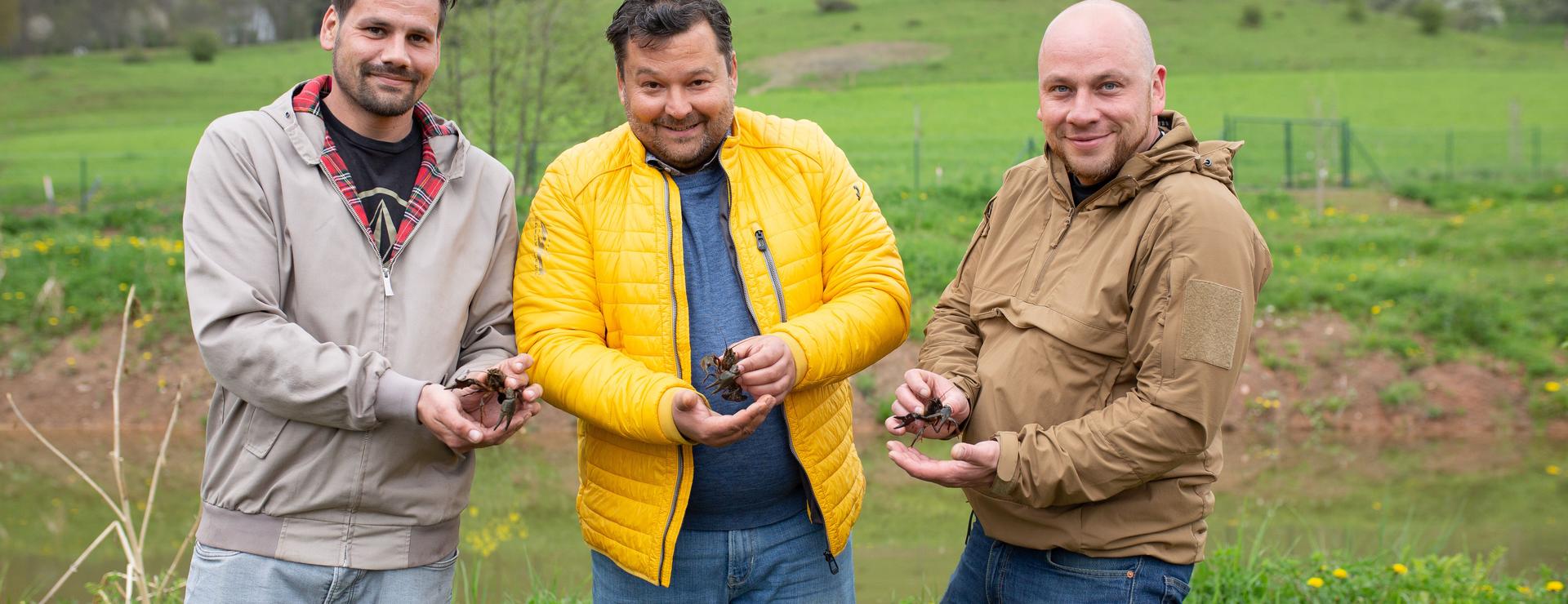



Three friends – one common goal
The crayfish farmers in Guttaring, Carinthia
Challenge
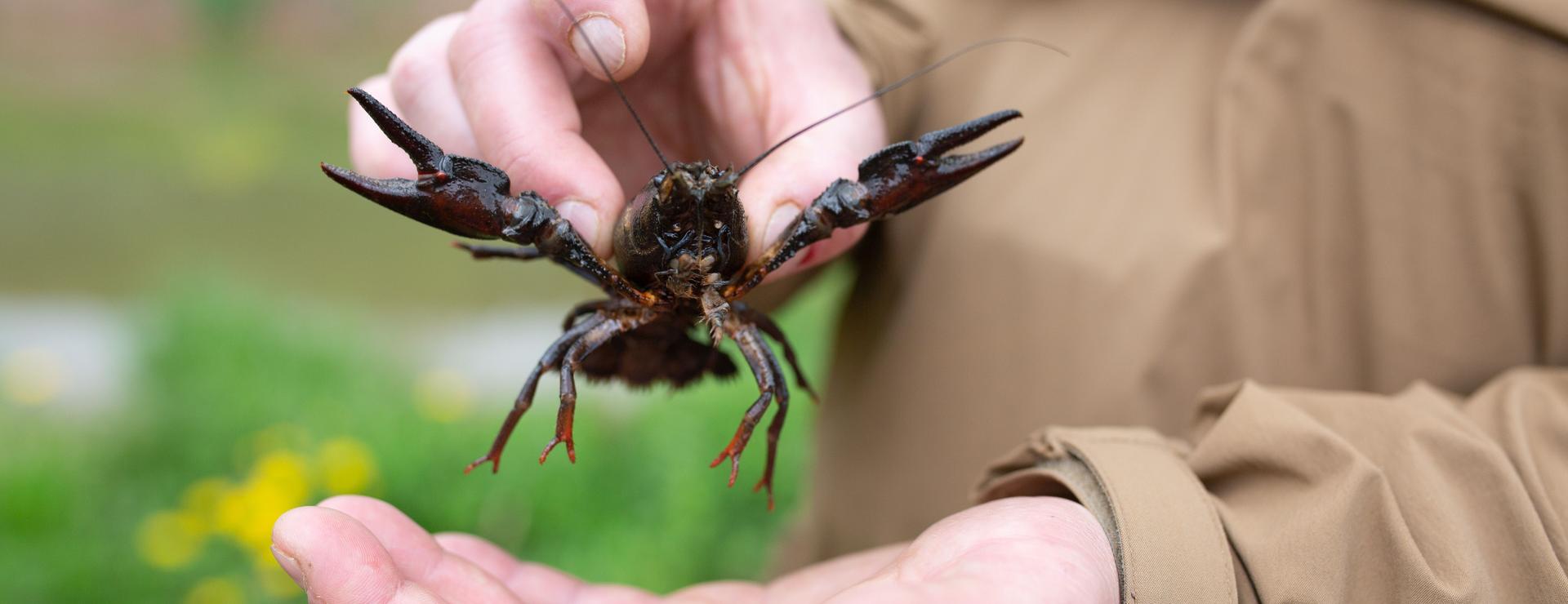
The native noble crayfish, which used to be widespread in Austrian waters, has been almost completely wiped out by crayfish plague and is in urgent need of new habitats.
Solution
Matthias, Florian and Manuel are setting up one of the country’s largest noble crayfish farms in Guttaring, Carinthia, with the aim of conserving the species, reintroducing it and offering it as a regional niche product for upmarket restaurants.
“Great things can only come about if we start small”
Matthias, Florian and Manuel have set up their own business based on an unusual idea, which is set to become a flagship project. They are planning one of the country’s largest noble crayfish farms in Guttaring, Carinthia.
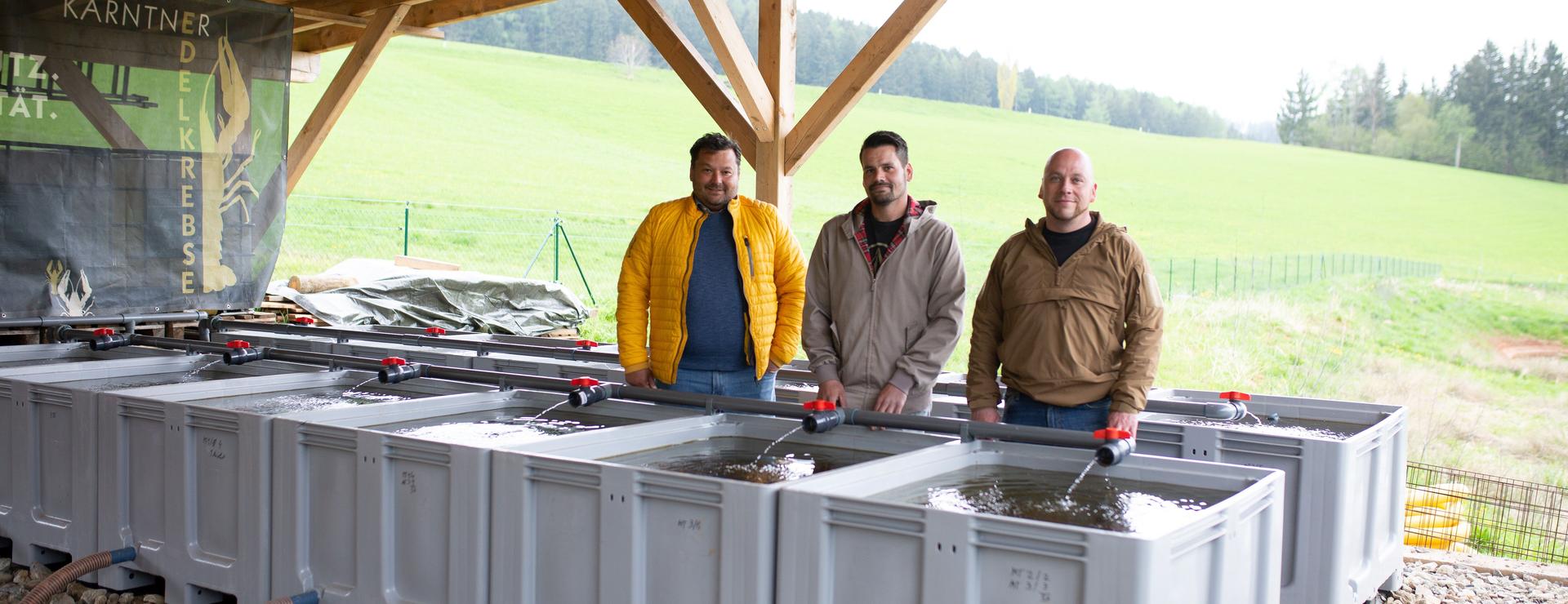
At present, 17 ponds are being laid out in terraces. The entire facility is supplied by a reservoir further upstream and with fresh water from a deep well.
The aim is to create a new habitat for the endangered noble crayfish, which used to be common in our local waters but was almost wiped out by crayfish plague.
“The aim is to develop the crayfish as an innovative niche product, making them available for reintroduction and restocking, whilst offering any surplus to the catering industry as a delicacy. Enquiries from upmarket restaurants have already been received. Projects such as this, which represent a unique selling point for the region, strengthen local economic cycles in particular.
The noble crayfish project is also intended to promote nature conservation. Black alders are being planted around the ponds because the crayfish like to eat the leaves of this tree in autumn. Chestnut and willow trees are also being planted to provide natural shade for the ponds. Between the ponds there are flower meadows, as well as old orchard meadows that are being planted.
We are delighted that the EUROPLAST Model CT/R3 boxes have been chosen for this project; these will be used as breeding facilities for the fertilised female crayfish.
Further plans include making the breeding grounds accessible to the public, schools and nurseries.